5 Things to Check Before Buying Your First Pair of Sneakers
Buying your first “real” pair of sneakers feels bigger than it should. Maybe you’re stepping into the resale world, maybe you just want a solid daily shoe that doesn’t fall apart in three months, or maybe you’ve fallen down the rabbit hole of drops and collabs and want in. Whatever the reason, that first purchase sets the tone for how you shop going forward.
I’ve bought, sold, and traded sneakers for years, and I’ve watched plenty of first timers get burned. Not because they lack taste, but because they skip the boring checks that actually matter. Here are the five things I tell every beginner to verify before handing over their money.
1. Get Your Actual Size, Not Your Assumed Size
This sounds obvious, but it’s the single biggest reason first purchases go wrong. Sneaker sizing has drifted so far from standard shoe sizing that assuming your usual size will translate is a mistake almost everyone makes once.
Brands fit differently, and even models within the same brand fit differently. A Nike Air Force 1 runs true to size for most people, but an Air Jordan 1 often fits a half size smaller. Adidas tends to run big compared to Nike, so someone wearing a US 10 in Jordans might need a 10.5 in Ultraboosts. New Balance is famously wide in the toe box compared to most competitors.
The fix is simple. Measure your foot at home with a piece of paper and a ruler, then cross-check that measurement against the specific brand’s size chart, not a general conversion chart you found on a random site. Most official brand sites publish these charts, and they’re worth the two minutes it takes to look them up.
Quick Reference: Common Fit Differences
| Brand/Model | Typical Fit | Sizing Tip |
|---|---|---|
| Nike Air Force 1 | True to size | Order your normal size |
| Air Jordan 1 | Runs small | Consider going up 0.5 |
| Adidas (most models) | Runs large | Consider going down 0.5 |
| New Balance | Wide toe box | Great for wider feet, true to size |
| Converse Chuck Taylor | Runs large | Consider going down 0.5 to 1 full size |
If you’re buying online and can’t try them on first, always check reviews for that specific model. Sizing complaints show up fast in customer feedback, and they’re more reliable than any general chart.
2. Know What You’re Actually Using the Shoes For
A lot of first time buyers pick a shoe because it looks good in photos, then get frustrated when it hurts to wear after two hours of walking. Sneakers are not one size fits all in function any more than they are in sizing.
Ask yourself what the shoe needs to do. Daily wear, light gym sessions, running, or purely for looks and occasional outings. Each answer points toward a different category.
- Everyday casual wear: Look for cushioned midsoles, breathable uppers, and durable outsoles. Air Force 1s, Adidas Superstars, and New Balance 574s are built for this.
- Running or serious cardio: You want dedicated running shoes with proper arch support and shock absorption, not lifestyle sneakers that just look athletic.
- Gym and lifting: Flat, stable soles matter more than cushioning here. Bouncy running shoes actually hurt your balance under load.
- Fashion and collecting: Comfort still matters, but you’re prioritizing design, colorway, and resale potential over performance features.
I’ve seen people spend $200 on a hyped sneaker only to realize it’s a lifestyle shoe with zero support, then try to use it as a daily walker for a physically demanding job. Match the shoe to the job first, then let aesthetics narrow down the options within that category.
3. Check the Materials, Not Just the Look
Photos flatten everything. A shoe can look premium in a product image and turn out to be built from thin, stiff synthetic leather that creases badly within a month. Before buying, especially online, dig into what the upper and sole are actually made of.
Genuine leather ages better and molds to your foot over time, but it costs more and needs occasional care. Suede looks great but stains easily and needs a protectant spray before the first wear. Mesh uppers breathe well and suit warm climates, but they wear out faster and offer less structure. Synthetic leather is affordable and low maintenance, but quality varies wildly between brands.
Outsole material matters just as much as the upper. Rubber outsoles grip better and last longer. Foam-based soles are lighter and more comfortable initially, but they compress and lose responsiveness faster, especially on running shoes used daily.
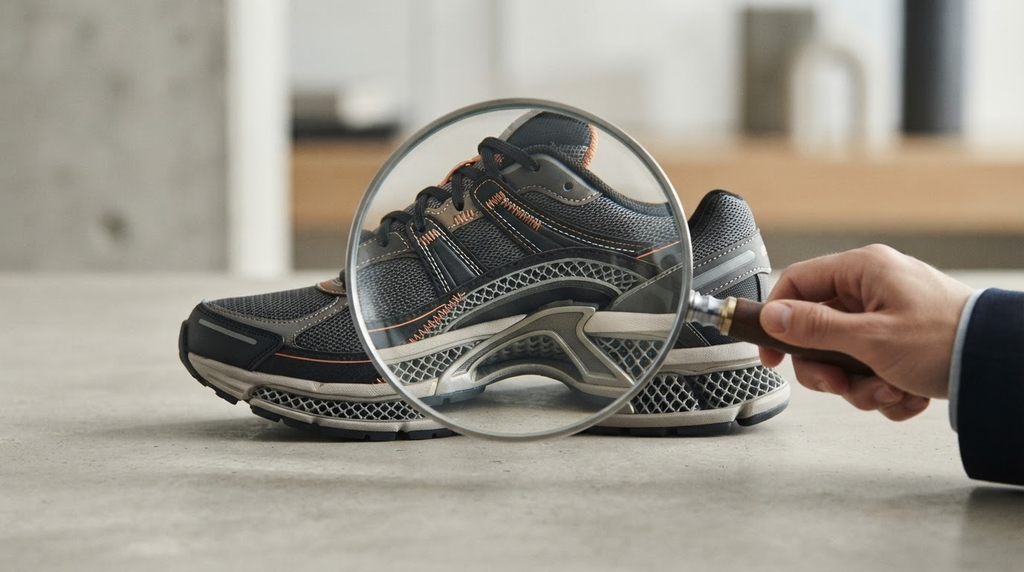
If you’re buying in person, flex the shoe in your hands. A well-made sneaker resists creasing at unnatural points and springs back into shape. If you’re buying online, read the product description carefully and look at close-up photos of the sole and stitching before you commit.
4. Verify Authenticity If You’re Buying Resale or Secondhand
This one is non-negotiable if you’re stepping into the resale market, which a lot of first time buyers do because it’s where the exciting colorways and collabs live. Counterfeit sneakers have gotten scary good, and even experienced collectors get fooled occasionally.
Before buying secondhand, check the seller’s return policy and reputation first. A legitimate seller will have detailed photos of the box, insole, stitching, and any date codes stamped inside the shoe. If a listing only shows the shoe from a distance with no close-ups of these details, treat that as a warning sign.
Learn the specific tells for the model you want. Stitching count, font on the size tag, box label placement, and even the smell of the material can differ between real and fake pairs. A quick search for “[shoe name] legit check” before you buy will usually turn up detailed comparison guides made by people who’ve studied fakes closely.
Price is also a signal. If a pair is listed well below the going resale rate for that size and condition, that’s rarely a bargain. It’s usually a red flag.
5. Test the Return and Comfort Window
Even after doing everything right, sneakers can still feel off once you actually walk in them. Stiff materials that seemed fine in the box can rub against your ankle after twenty minutes outside. This is why the return policy deserves attention before you buy, not after you’re stuck with a shoe that hurts.
Check how many days you have to return or exchange the pair, and whether the shoe needs to stay unworn or if light indoor wear is allowed. Some retailers only accept returns if the sole shows zero wear, which means you can’t even test them on carpet without risking the return option.
Give any new pair a real test at home. Walk around indoors for fifteen to twenty minutes on a clean surface before deciding they’re keepers. Comfort issues almost always show up early, and catching them within the return window saves you from owning an expensive shoe that sits in the closet.
Final Thoughts
Buying your first pair of sneakers should feel exciting, not stressful, and it will if you slow down on these five checks. Get your real size for that specific model, match the shoe to how you’ll actually use it, look closely at materials instead of just photos, verify authenticity on any resale purchase, and always know your return window before committing.
None of this takes long once it becomes habit. Do it right the first time, and you’ll walk away with a pair that actually earns a spot in your rotation instead of collecting dust in the closet.