

What Is the 3 Shoe Rule?
If you have spent any time in sneaker forums, resale groups, or shoe collector circles, you have probably run into the phrase “3 shoe rule” at some point. It gets tossed around casually, as if everyone already knows what it means. Most people do not. I have watched newcomers nod along in conversations while quietly wondering if this is some official policy or just internet folklore. It is time to clear that up.
The 3 shoe rule is a personal guideline, not a law handed down by Nike or Adidas. It is a practical framework that collectors and sneakerheads use to keep their shoe habits in check. At its core, the rule suggests limiting yourself to owning, wearing, or rotating a maximum of three pairs of shoes for any given category or purpose. Think of it as a self-imposed budget for your closet space, your wallet, and your sanity.
Where the 3 Shoe Rule Comes From
Nobody can point to a single person who invented this rule. It grew organically out of minimalist fashion circles and got adopted by sneaker culture as collections started spiraling out of control. Sneaker collecting exploded in popularity over the last fifteen years, and with that growth came storage nightmares, decision fatigue, and closets that looked more like warehouses.
The rule caught on because it solves a real problem. When you own forty pairs of sneakers, picking what to wear each morning becomes a chore instead of a pleasure. The 3 shoe rule pushes back against that excess by forcing intentional choices.
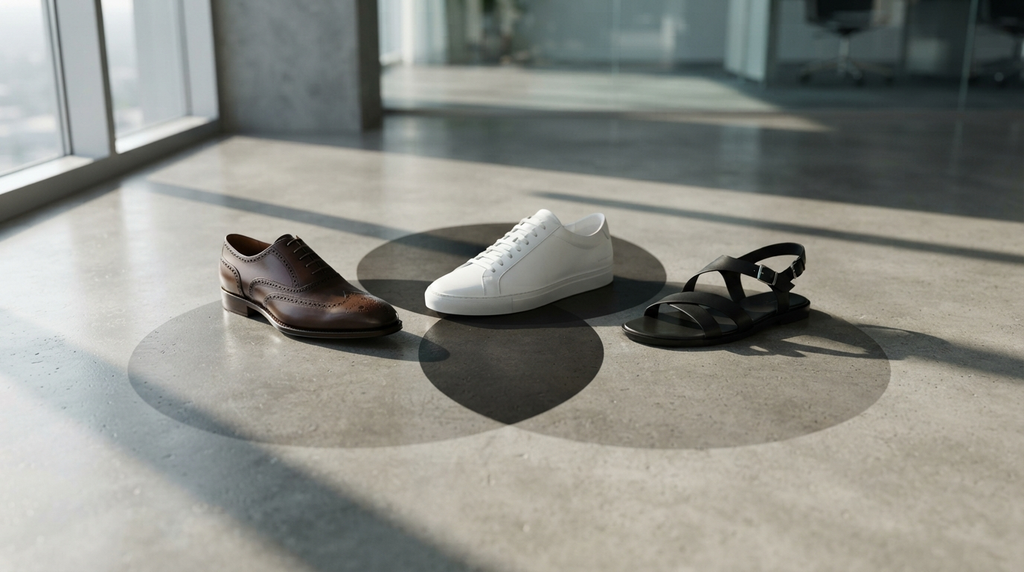
I first heard the term from a friend who works in shoe resale. He explained it as a way to keep his personal collection separate from his inventory. He kept exactly three pairs for daily life: one for work, one for workouts, and one for casual weekend wear. Everything else got sold, traded, or donated.
How the Rule Actually Works
The exact numbers can flex depending on who you ask, but the spirit stays consistent. Here is the most common breakdown people use when applying the 3 shoe rule to everyday life.
| Category | Purpose | Example |
|---|---|---|
| Work or formal shoe | Office, meetings, dressier occasions | Leather oxfords, clean minimalist sneakers |
| Athletic or performance shoe | Running, gym sessions, sports | Running shoes, cross-trainers |
| Casual or lifestyle shoe | Weekends, errands, hanging out | Classic sneakers, canvas shoes |
Some people expand this into a “3 shoe rule per category” instead of three shoes total. That means you might allow yourself three work shoes, three athletic shoes, and three casual pairs, landing at nine total. Others stick to the strict version: three shoes, period, covering every situation life throws at you.
The flexibility is part of the appeal. You get to define what works for your lifestyle while still committing to a ceiling that prevents runaway accumulation.
Why People Actually Follow It
The rule sticks around because it solves problems that go beyond just shoes. Here is what draws people to it.
- Decision fatigue drops fast. Fewer options mean faster mornings and less mental energy wasted on what to wear.
- Storage stays manageable. Three pairs fit in a small closet corner. Thirty pairs need a dedicated room.
- Spending gets controlled. A hard limit means you have to let go of something before buying something new, which naturally slows down impulse purchases.
- Quality replaces quantity. When you only get three pairs, you choose better materials and better construction instead of settling for cheap options you will replace in six months.
- Resale value improves. Shoes worn in rotation rather than daily grinding hold their shape and last longer, which matters if you ever want to sell or pass them along.
I have tried this myself for the past year, cutting my rotation down from what used to be twelve pairs to a tight five. The clarity it brought to my mornings surprised me. I stopped standing in front of my closet wondering which shoes matched my mood. I just grabbed one of my three go-to pairs and moved on with my day.
Applying the Rule to Sneaker Collecting Specifically
Sneaker collectors sometimes interpret the rule differently than the average person building a practical wardrobe. For collectors, the 3 shoe rule can mean limiting how many pairs of the same silhouette or colorway you own. Instead of grabbing every drop of a popular model, you cap yourself at three variations.
This version of the rule keeps collections curated rather than cluttered. A collector following this approach might own three Air Jordan 1 colorways instead of fifteen, three New Balance 550 pairs instead of a dozen. The goal shifts from hoarding to curating a collection with actual meaning behind each pair.
Common Variations Collectors Use
- The 3 per silhouette rule: cap each specific shoe model at three colorways.
- The 3 per season rule: buy a maximum of three new pairs per season to control spending.
- The 3 rotation rule: keep three pairs in active rotation while storing or selling the rest.
Whichever version you pick, the underlying philosophy stays the same. Set a number, respect it, and let it guide your purchasing decisions instead of letting impulse take over.
Is the 3 Shoe Rule Right for Everyone?
Honestly, no single rule fits every lifestyle perfectly. Someone who hikes, runs marathons, works a formal office job, and plays weekend basketball needs more than three pairs to function. The rule works best as a mindset rather than a rigid law carved in stone.
I recommend treating it as a starting framework. Adjust the number up or down based on your actual needs, but keep the core discipline intact. The point is intentionality, not deprivation. If four pairs genuinely cover your life better than three, go with four. The magic number matters less than the habit of stopping to ask whether you truly need another pair before buying one.
Key Takeaways
The 3 shoe rule is a self-imposed guideline that helps people control closet clutter, spending habits, and decision fatigue by limiting their shoe collection to a manageable number. It started in minimalist and sneaker communities as a reaction against excessive collecting and has since evolved into several flexible variations, from limiting daily rotation shoes to capping colorways per silhouette.
The real value lies in the discipline it teaches, not the exact number three. Whether you follow it strictly or adapt it to fit your life, the rule pushes you toward smarter, more intentional shoe ownership.
If your closet has turned into a shoe graveyard, give this rule a real try for thirty days. Pick your three essential pairs, box up the rest, and see how much lighter your daily routine feels. You might find that less really does deliver more.